

Writing essays quickly is not about rushing or cutting corners. It is about using a smarter process. Many students waste time because they start without a plan, overthink every sentence, or spend too long researching ideas they never use. The result is stress, slow progress, and an essay that still feels unfinished.
The good news is that faster essay writing is a skill you can learn. When you follow a clear system, you can finish essays more efficiently without sacrificing quality. This is especially important in 2026, when students often face tight deadlines, multiple assignments, and constant distractions.
This step-by-step guide explains how to write essays faster while keeping your work organized, clear, and strong.
Why Students Write Essays Too Slowly
Before improving your speed, it helps to understand what usually causes delays. Most students do not write slowly because they lack ability. They write slowly because their process is inefficient.
Common reasons include:
- starting without understanding the prompt
- doing too much research
- editing while drafting
- trying to make every sentence perfect
- getting distracted by phone notifications or other tabs
- not knowing what to write next
Faster writing starts with fixing these habits.
Step 1: Understand the Essay Prompt Clearly
Before writing anything, read the assignment carefully. This is one of the fastest ways to save time later. If you misunderstand the prompt, you may end up rewriting large sections of the essay.
Look for:
- the topic
- the type of essay
- the word count
- the deadline
- the required citation style
- instruction words such as analyze, compare, argue, or explain
If needed, rewrite the task in one simple sentence. That helps clarify exactly what your essay needs to do.
Step 2: Set a Time Limit for Each Stage
One reason essays take too long is that students move through the process without clear limits. Instead, break the work into short stages.
A practical essay writing schedule might look like this:
- 10 minutes to understand the prompt and plan
- 20 minutes for research
- 30 to 40 minutes for drafting
- 15 to 20 minutes for editing and proofreading
You can adjust the timing depending on the assignment, but setting limits keeps you moving.
Step 3: Do Focused Research Only
Research is necessary, but too much research slows everything down. Many students collect far more information than they actually use.
Instead, research with a purpose. Look for:
- the main facts you need
- 2 to 4 strong sources
- examples that directly support your points
- one or two useful statistics or expert views if relevant
Do not aim to know everything about the topic. Aim to know enough to write a strong essay.
Step 4: Create a Quick Outline
If you want to write essays faster, do not skip the outline. A short outline helps you organize ideas before you start drafting, which makes writing much smoother.
A simple outline looks like this:
Introduction
- topic
- context
- thesis
Body Paragraph 1
- first main point
- support or example
Body Paragraph 2
- second main point
- support or example
Body Paragraph 3
- third main point
- support or example
Conclusion
- restate thesis
- summarize key ideas
This takes only a few minutes but saves much more time later.
Step 5: Write a Clear Thesis Statement Early
A thesis statement gives your essay direction. Without it, you may waste time writing paragraphs that do not connect well.
Weak thesis:
Time management matters for students.
Strong thesis:
Students can write essays faster by planning clearly, limiting distractions, and using a simple writing structure.
A strong thesis tells you exactly what the essay will cover, which makes drafting easier.
Step 6: Draft the Body Paragraphs First
Many students get stuck trying to write the perfect introduction. A faster approach is to begin with the body paragraphs, where your main ideas are usually easier to explain.
Each body paragraph should include:
- a topic sentence
- an example or evidence
- a short explanation
- a link back to the main point
When you draft the body first, your introduction and conclusion often become easier to write later.
Step 7: Keep the First Draft Simple
Your first draft does not need to sound perfect. It needs to exist. The more you stop to rewrite every sentence, the slower the essay becomes.
While drafting:
- keep sentences clear and direct
- do not over-edit
- move to the next paragraph if you get stuck
- leave small wording fixes for later
Fast writers understand that drafting and editing are different tasks.
Step 8: Use a Simple Essay Structure Every Time
A proven structure helps you write faster because you do not have to invent the format from scratch each time.
For most essays, this structure works well:
Introduction
Introduce the topic and present your thesis.
Body Paragraph 1
Explain your first main point.
Body Paragraph 2
Develop your second main point.
Body Paragraph 3
Present your third main point.
Conclusion
Restate the thesis and summarize the argument.
This structure is simple, effective, and easy to repeat.
Step 9: Avoid Editing While You Write
This is one of the biggest mistakes students make. They write one sentence, reread it, change three words, delete half the line, and lose momentum.
That habit slows the whole essay down.
Instead, finish the draft first. Then edit. Separating these stages helps you write much faster and think more clearly.
Step 10: Use Clear Language, Not Complicated Language
Trying to sound overly academic often wastes time and weakens clarity. Simple, direct language is faster to write and easier to read.
Slower version:
The implementation of strategic compositional methodologies enhances student productivity.
Better version:
Good writing habits help students finish essays faster.
Clear writing usually leads to a stronger essay anyway.
Step 11: Remove Distractions Completely
In 2026, one of the biggest reasons students write slowly is distraction. Even short interruptions can destroy focus.
To write faster:
- put your phone away
- close unrelated tabs
- turn off notifications
- work in one document only
- use a timer for focused writing sessions
Even 25 minutes of deep focus can produce excellent progress.
Step 12: Write the Introduction After the Main Ideas Are Clear
Once your body paragraphs are drafted, writing the introduction becomes easier. You already know what the essay says, so you can introduce it more effectively.
A strong introduction should include:
- an opening sentence
- brief context
- a clear thesis statement
Do not spend too much time trying to make the opening dramatic. It just needs to be relevant and clear.
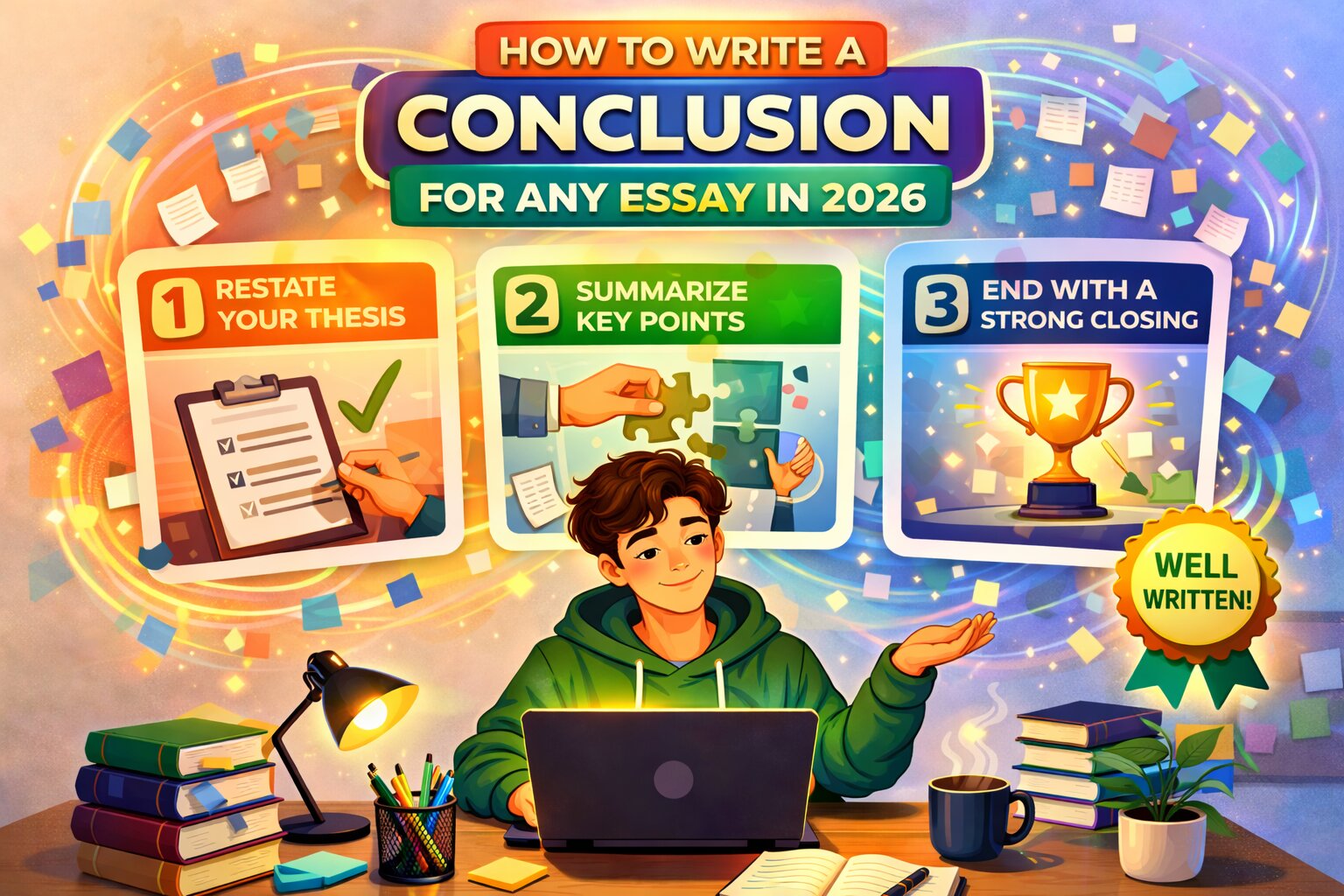
Step 13: Finish with a Short, Strong Conclusion
A conclusion does not need to be long. It should simply bring the essay to a clean and confident ending.
A good conclusion should:
- restate the thesis in different words
- summarize the main points
- leave the reader with a final thought
Keep it focused. Do not introduce new arguments here.
Step 14: Edit in Stages
Editing becomes faster when you check one thing at a time instead of trying to fix everything at once.
First pass: structure
Make sure the essay flows logically.
Second pass: clarity
Improve weak wording, repetition, and transitions.
Third pass: grammar
Check spelling, punctuation, and formatting.
This method is quicker and more effective than random editing.
Step 15: Focus on the Biggest Problems First
When time is limited, fix what matters most.
Start with:
- unclear thesis
- weak paragraph structure
- unsupported points
- repetition
- awkward transitions
Only after that should you focus on smaller wording details. Strong structure matters more than one perfect sentence.
Step 16: Use AI Tools Carefully
In 2026, many students use AI to save time. That can help, but only when used properly.
Useful ways to use AI include:
- brainstorming ideas
- creating a rough outline
- improving grammar
- simplifying unclear sentences
Less useful ways include copying generic text without revision. That often makes essays sound flat and repetitive.
Use AI to support your writing process, not replace your thinking.
Step 17: Build a Repeatable Writing Routine
The fastest writers usually follow the same process every time. They do not guess their way through each new essay. They use a system.
A simple routine might be:
- read the prompt
- make an outline
- write a thesis
- draft the body
- write the introduction and conclusion
- edit in stages
- proofread once more
The more often you repeat this method, the faster writing becomes.
Common Mistakes That Slow Essay Writing Down
Students often take too long because they:
- begin without a plan
- research too much
- chase perfect wording too early
- write without a thesis
- get distracted every few minutes
- revise before finishing the draft
- leave no time for proofreading
Avoiding these habits can improve your speed immediately.
Quick Example of a Fast Essay Workflow
Imagine you need to write an essay on whether part-time jobs benefit students.
You could approach it like this:
First, read the prompt and decide your position.
Second, create a quick outline with three benefits.
Third, write a thesis such as: part-time jobs benefit students by building responsibility, improving time management, and reducing financial stress.
Fourth, draft the body paragraphs.
Fifth, write the introduction and conclusion.
Finally, revise for clarity and grammar.
This approach is much faster than trying to write perfectly from the first line.
Final Tips for Writing Essays Faster
If you want to improve your speed consistently, remember these principles:
- plan before you write
- keep your structure simple
- draft first, edit later
- use clear language
- work without distractions
- stop researching once you have enough
- focus on progress, not perfection
Fast writing is usually the result of discipline, not talent.
Conclusion
Learning how to write essays faster is not about lowering standards. It is about using a better process. When you understand the prompt, plan your argument, limit distractions, and separate drafting from editing, essay writing becomes much more efficient.
A fast essay can still be a strong essay. In fact, students often write better when they stop overthinking and follow a clear structure.
In 2026, the smartest students are not the ones who spend the most time on every essay. They are the ones who know how to write efficiently, clearly, and with confidence.